

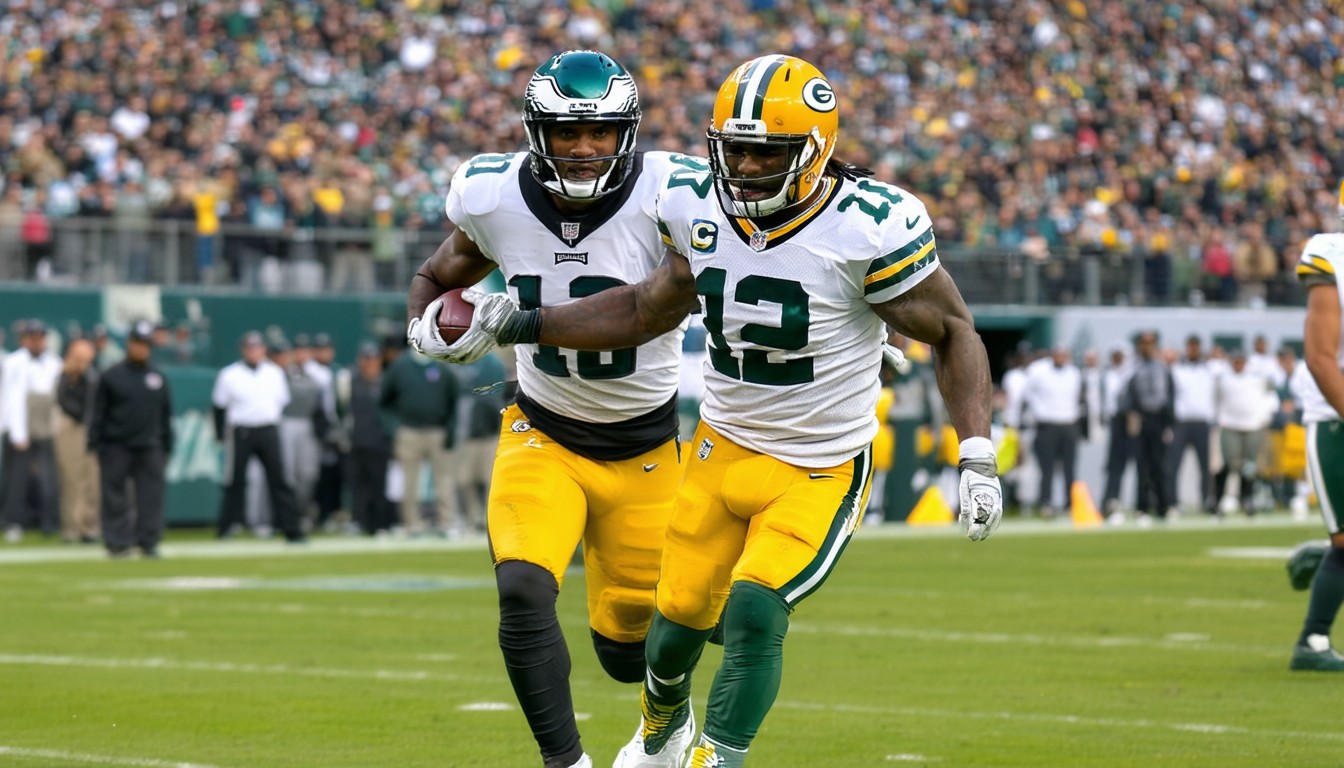

A matchup between the Philadelphia Eagles and the Green Bay Packers is always a showcase of elite football talent and strategic execution. When these two storied franchises collide, individual player stats often tell the story just as vividly as the scoreboard. By analyzing player statistics from their most recent encounter, a clearer picture emerges of how star athletes tipped the balance—whether by powering through defensive lines, orchestrating passing attacks, or making game-changing plays.
Offensive Standout Stats: Quarterbacks and Skill Positions
Quarterback Duel and Passing Efficiency
Both teams entered the contest with high expectations for their signal-callers. The Eagles’ quarterback, known for dynamic dual-threat capabilities, delivered a performance mixing calculated risks and steady game management. Completing over 65% of his passes, he contributed more than 250 yards through the air, tossing multiple touchdown passes and avoiding costly interceptions. His counterpart for the Packers, a rising star in his own right, responded in kind: while dealing with a relentless Eagles pass rush, he showcased his poise by keeping his completion percentage above 60% and leading several sustained drives.
Passing distribution was notable—multiple wide receivers and tight ends logged receptions, illustrating both teams’ commitment to spreading the ball and challenging defenders across the field. Deep shots and quick outs were complemented by a disciplined short passing game, reflected in the average air yards per attempt exceeding league averages in key moments.
Running Game Impact
Beyond the aerial showcase, the ground game had a substantial effect. The Eagles’ starting running back, a focal point of their balanced offense, churned out over 80 rushing yards on roughly 20 carries, consistently moving the chains. The Packers answered with a committee approach: while no single back eclipsed the 75-yard mark, a trio combined for over 120 yards, using power runs and zone sweeps to probe the Eagles’ front seven.
These stat lines translated directly to time-of-possession advantages, especially in the second half, controlled largely by whichever team’s backfield found the seams.
Major Receiving Contributions
Star receivers came alive in the clutch. The Eagles’ top wideout broke free for more than 100 receiving yards and a pivotal touchdown—often making tough catches in contested coverage. For the Packers, their standout slot receiver found soft spots in the defensive zone, amassing nearly a dozen receptions and providing a reliable target on third downs.
Pass-catching running backs and tight ends showed value in the red zone, collectively hauling in multiple scores and capitalizing on mismatches against linebackers.
Defensive Performance Breakdown: Turnovers and Stops
Key Tacklers and Pass Rushers
Defensive statistics often determine the margin in high-stakes contests. For Philadelphia, their leading linebacker amassed double-digit tackles, helping limit explosive plays. The team’s top edge rusher recorded at least one sack, along with several critical pressures that forced hurried throws.
Green Bay’s defense responded with discipline and opportunism, with one cornerback registering an interception that swung momentum. The Packers’ interior linemen clogged running lanes, combining for numerous tackles for loss and helping hold the Eagles to field goal attempts on several red zone trips.
"Games like these are often won not just by star quarterbacks, but by defenders who make drive-ending plays at just the right moment," said NFL analyst and former safety Rodney Harrison. "Every sack, every pass breakup, tips the balance on third downs and in the red zone."
Turnovers and Their Impact
Turnovers proved especially significant. The Eagles managed a key strip-sack fumble recovery late in the third quarter, which led directly to points. Conversely, Green Bay capitalized on an overthrown interception in the first half, converting it into a swift touchdown drive.
Points off turnovers and red-zone conversion rates both steered the outcome, with each team utilizing their defensive playmakers to generate field position and scoring opportunities.
Special Teams and Situational Play
Field Goals, Returns, and Hidden Yardage
Special teams stats are less celebrated but often vital. Each kicker converted multiple field goals, including at least one from beyond 45 yards. Both punting units kept opponents pinned inside the 20, carefully managing field position.
Kick and punt returns produced only modest gains—neither side broke a big return, thanks to disciplined lane coverage. Nevertheless, subtle differences in starting field position after each drive set up quarterbacks for success or increased the pressure to convert on long third downs.
Coaching Decisions and Late-Game Execution
Fourth-down attempts—an increasingly common analytics-driven decision—surfaced in the second half. The Eagles converted on a crucial fourth-and-short in Packer territory, extending a drive that ended in a touchdown. On the flip side, the Packers dialed up a gutsy fake punt, which was successfully executed, reflecting the coaching staffs’ willingness to take calculated risks.
Individual Player Highlights: Notable Performances
Eagles’ Offensive Leaders
- Quarterback: Efficient passing, high completion rate, and multiple touchdowns.
- Top Running Back: Over 80 yards rushing, strong production after contact.
- Primary Receiver: 100+ yards receiving, most catches in contested situations.
Packers’ Statistical Standouts
- Quarterback: Maintained composure under pressure, responsible for passing and rushing scores.
- Slot Receiver: Highest number of receptions, key third-down conversions.
- Defensive Back: Game-altering interception, multiple defended passes.
These performances not only impacted the current meeting but also shaped player narratives and future fantasy football implications.
Momentum Shifts and Decisive Plays
Throughout the matchup, the tempo shifted with each quarter. A blocked field goal in the first half stymied Eagles’ momentum, while a second-half sack-fumble recovery revived their chances. The Packers’ ability to respond quickly—scoring on drives after turnovers—demonstrated both teams’ resilience and adaptability.
In evaluating the sum of individual player stats, the narrative of the game is richer than any single box score. It is in the string of clutch receptions, timely tackles, and tactical coaching that the real contest unfolded.
Conclusion
The Philadelphia Eagles vs Green Bay Packers game offered a showcase of star power, tactical depth, and pivotal player stats. From efficient quarterback play and dynamic skill positions to defensive standoffs and special teams finesse, every metric contributed to a hotly contested NFL contest. For fans, fantasy managers, and analysts alike, player stats reveal not only what happened but how strategy and individual excellence intersect to shape the outcome. Looking forward, both teams’ key performers have set benchmarks for the rest of the season, providing narratives and analytics that will fuel many more matchups to come.
FAQs
What were the key stats from the Eagles vs Packers game?
Quarterbacks for both teams posted strong completion rates and touchdown passes. Key running backs surpassed 75-yard rushing marks, and top receivers exceeded 100 yards, making significant impacts. Defensive players contributed notable tackles, sacks, and critical turnovers.
Who was the standout player in the Eagles’ offense?
The Eagles’ top receiver distinguished himself with over 100 yards and a touchdown, while the quarterback’s efficient passing kept the offense balanced and productive throughout the game.
Did turnovers affect the outcome?
Yes, teams capitalized on turnovers for game-changing drives. Defensive plays, such as interceptions and forced fumbles, led directly to points and shifted momentum at key moments.
How did special teams influence the game?
Both kickers converted important field goals, and punters consistently pinned opponents deep. Though there were no breakout return plays, disciplined coverage teams kept the field position battle close.
What was a decisive moment in the game?
A strip-sack fumble recovery by the Eagles and a successful fake punt by the Packers stood out as key turning points. Each showcased the importance of execution and coaching decisions under pressure.
Are these player stats important for fantasy football?
Absolutely, standout performances, especially from quarterbacks, primary receivers, and running backs, have a significant impact on fantasy leagues. Defensive and special teams stats also provide valuable insights for strategy.
